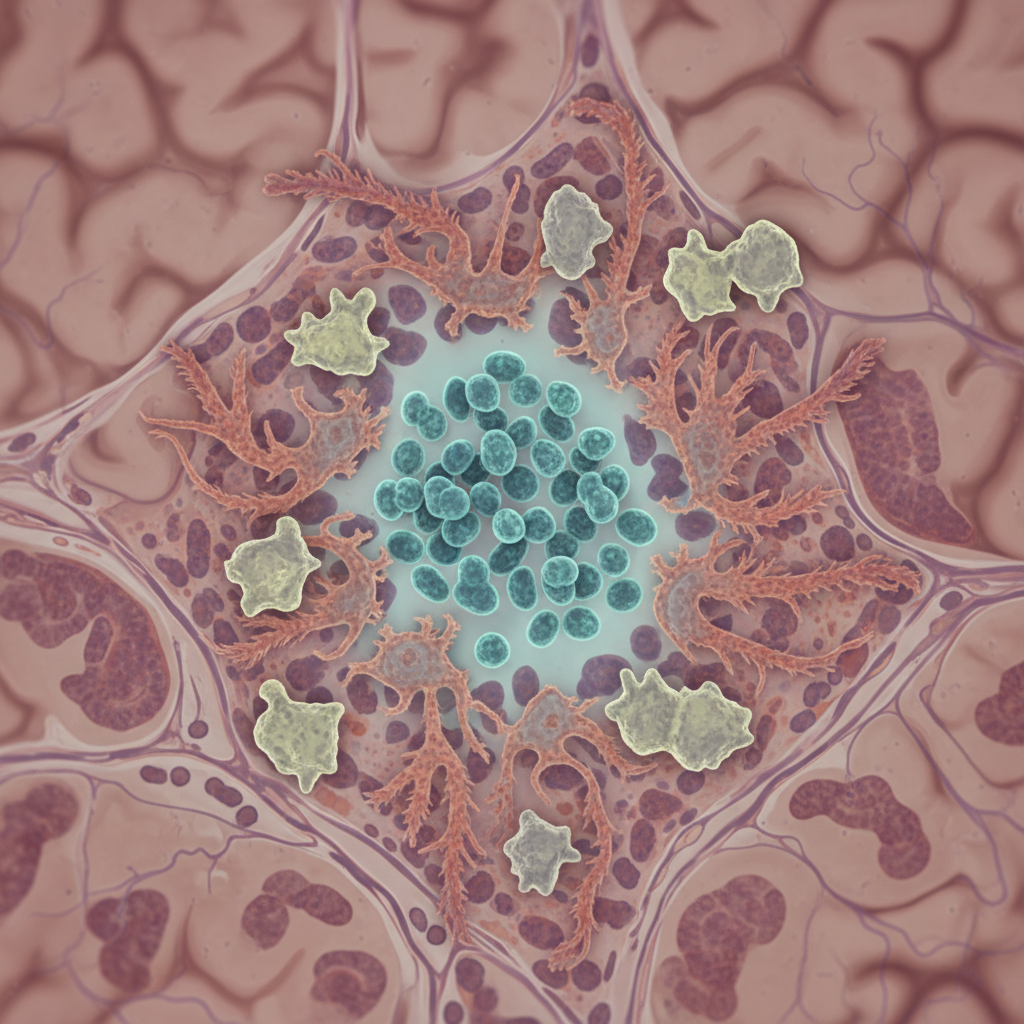
How brain metastases turn immune cells into tumour allies
How brain metastases turn immune cells into tumour allies
For years, the simplest way to think about brain metastases was to imagine cancer cells reaching the brain, settling there and growing in a difficult organ. That explanation is no longer enough. What newer research increasingly suggests is that metastatic tumours in the brain do more than occupy space. They actively reshape the environment around them, including the immune cells that would normally be expected to resist them.
That is the real meaning behind headlines saying tumours “hijack” immune cells. The language is metaphorical, but the biology behind it is serious. Rather than merely escaping immune attack, brain metastases appear able to push local immune populations into states that are less effective, more exhausted and, in some cases, indirectly supportive of tumour survival.
This matters because it touches one of the central questions in modern oncology: why do some tumours continue to evade immunity even in the era of immunotherapy? In the brain, the answer may lie in a highly specific mix of local immune regulation, brain-resident cell biology and tumour-driven microenvironmental reprogramming.
A tumour does not grow alone
Cancer is never just the malignant cell. It also depends on the ecosystem around it. Blood vessels, connective tissue, inflammatory signals, organ-specific support cells and immune populations all influence whether a tumour is suppressed, tolerated or helped.
In the brain, that picture becomes even more complicated. The immune environment is unusual to begin with, shaped by the blood-brain barrier, brain-resident immune-like cells and a tightly controlled inflammatory balance. That means a tumour growing there is not simply dealing with “less immunity”. It is dealing with a different kind of immunity — one that may be highly regulated and, under the wrong conditions, vulnerable to manipulation.
That is the backdrop for the latest findings. Brain metastases do not seem to survive simply because the immune system cannot find them. They appear to survive in part because they can remodel the local immune response itself.
Macrophage-like cells may be central to that process
Among the most important players in this story are macrophages and related immune cell populations. These cells are highly adaptable. Under normal circumstances, they can help clear threats, regulate inflammation, present antigens and support tissue repair.
That flexibility is also what makes them vulnerable to tumour influence.
The supplied evidence supports this idea well. A recent mechanistic study showed that tumour-associated macrophages can push T cells from a progenitor exhaustion state into terminal exhaustion. Put more simply, these macrophages may help drive T cells from a still-recoverable anti-tumour state into one where they become far less effective.
That finding is important because it changes the way immune failure inside tumours is understood. It is not only a matter of whether T cells are present. It is also a matter of what condition they are in, and whether neighbouring immune cells are nudging them towards dysfunction.
What has been seen specifically in brain metastases
One of the papers most directly focused on brain metastasis used single-cell analysis in melanoma brain metastases and found a microenvironment consistent with strong local immune suppression. Researchers observed larger fractions of monocyte-derived macrophages and dysfunctional CD8 T cells with distinct immune checkpoint expression.
That matters because it points to a specifically brain-metastatic immune ecosystem. In other words, metastases in the brain may not simply carry their original biology into a new organ. They may adapt to the brain and, in doing so, help construct a local environment that becomes more permissive to tumour persistence.
That shifts the picture considerably. Brain metastasis begins to look less like a simple spread event and more like a negotiated biological state between the tumour and the brain’s immune environment.
The brain is not just another tumour site
A review included among the references reinforces this broader interpretation by emphasizing that immune suppression, brain-resident cell types and blood-brain-barrier biology are central to progression in both primary and metastatic brain tumours.
That point helps correct a common oversimplification. Brain tumours are often described as hard to treat mainly because therapies struggle to reach them. Drug delivery is certainly part of the problem. But so is the local biology. The brain offers a distinct immunological environment, and tumours appear able to exploit it.
When researchers describe tumours as “hijacking” immune cells, what they are really describing is a more complex process of local reprogramming. Cells that should contribute to tumour control end up participating, directly or indirectly, in an environment that helps the tumour persist.
Why exhausted T cells matter so much
T-cell exhaustion has become one of the most important concepts in cancer immunology because it helps explain why some tumours continue growing despite obvious immune cell infiltration.
An exhausted T cell is not absent. It is present, but functionally weakened. It becomes less able to proliferate, signal and kill malignant cells effectively. The emerging insight from these studies is that this exhaustion may not be a passive end state. It may be actively driven by other cells in the tumour environment, including tumour-associated macrophages.
That raises an important possibility. If tumours depend on this conversation between macrophage-like populations and exhausted T cells to maintain local immune failure, then interrupting that conversation may become a therapeutic strategy.
That is one reason this kind of work is attracting attention. It points not only to immune escape, but to specific mechanisms that may help produce it.
What this could mean for immunotherapy
The most important implication may be that immunotherapy for brain metastases cannot always rely on simply “switching on” the immune system in a broad way. If the problem also involves macrophage-driven T-cell exhaustion and a locally suppressive brain microenvironment, then future approaches may need to do more than block one checkpoint.
They may need to alter the tumour ecosystem itself.
That could eventually mean combination strategies: approaches that both reinvigorate T cells and stop the tumour from continuously reprogramming surrounding immune populations into more permissive states.
At the moment, though, that remains a research direction rather than an established treatment pathway.
What the evidence does not yet prove
This is where restraint matters.
The strongest mechanistic paper provided is focused on glioblastoma and T-cell exhaustion rather than brain metastasis specifically. The one paper directly studying brain metastasis focuses on melanoma brain metastases, which means it is not certain how far the findings extend to other tumour types that spread to the brain.
Most of the evidence is mechanistic, single-cell or preclinical. That makes it highly useful for understanding biology, but it is not the same thing as showing that targeting these pathways improves survival in patients.
It is also important to remember that “hijack” is shorthand. The real biology is not a single switch being flipped. It is a layered process of microenvironmental reprogramming involving multiple cell states, signals and interactions.
So while the general direction is well supported, it would be premature to suggest that a new treatment has already emerged from these findings.
The most useful way to read this story
The most productive way to understand this research is as a tumour microenvironment story. It reinforces the idea that brain metastases do not thrive only because they avoid immune destruction. They also appear to help build a local ecosystem in which immune control becomes progressively less effective.
That shifts the focus of the scientific question. Instead of asking only how to kill tumour cells directly, researchers are increasingly asking how to stop tumours from turning the surrounding immune environment into something more hospitable.
That is not a small change in emphasis. In modern cancer biology, it is a major one.
The bottom line
The supplied evidence strongly supports the idea that brain tumours and brain metastases can manipulate immune cells within the local microenvironment, especially macrophage-like populations and exhausted T-cell states, in ways that favour tumour survival.
So the headline’s suggestion that tumours “hijack” immune cells is a reasonable summary, even if the underlying biology is more complex than the metaphor implies.
What these studies do not yet show is that blocking these pathways already improves survival or constitutes an established new treatment. For now, the advance is mainly one of understanding. And that matters. Understanding how brain metastases reshape immunity may be exactly what is needed to design better immunotherapies in the future — not just against the tumour cell itself, but against the protective ecosystem it builds around itself.