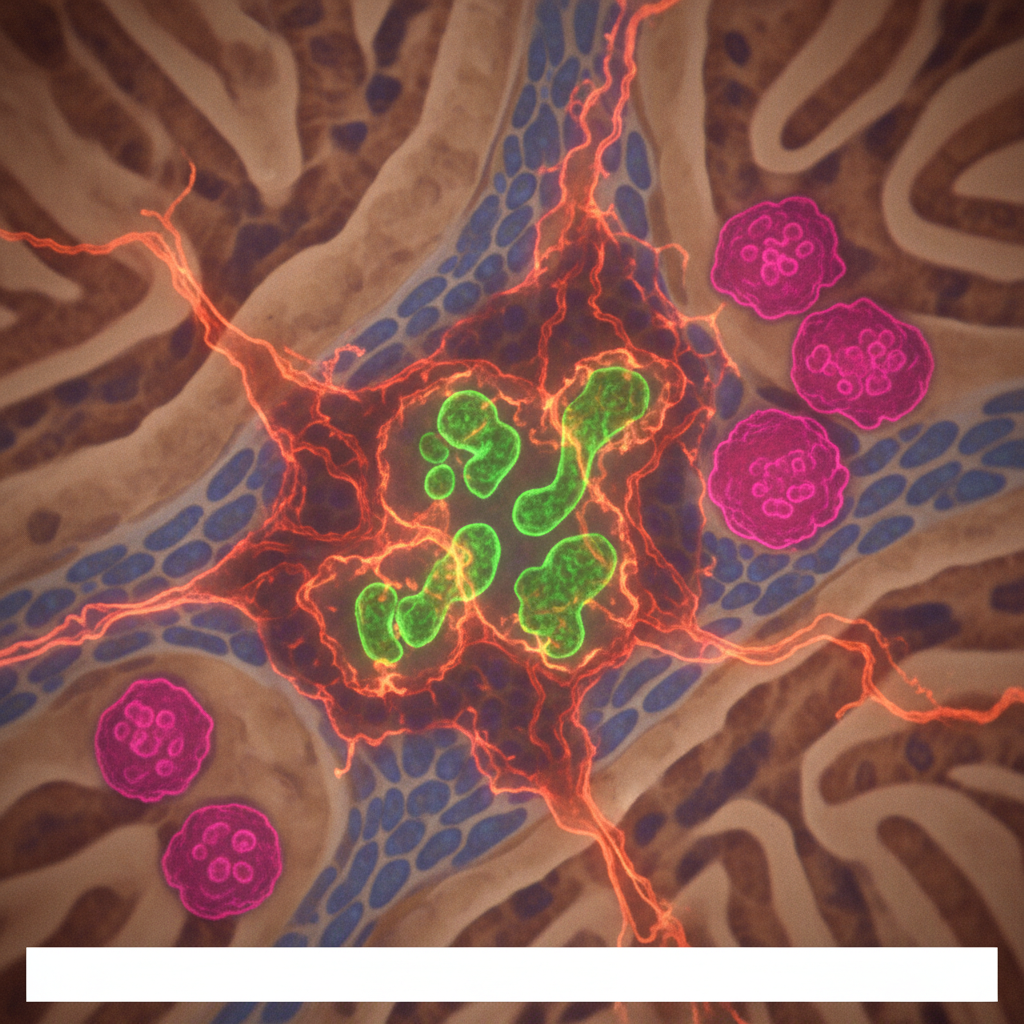
Chronic inflammation may leave a ‘memory’ in gut stem cells — and that could help explain colorectal cancer risk
Chronic inflammation may leave a ‘memory’ in gut stem cells — and that could help explain colorectal cancer risk
For a long time, inflammation was treated mostly as a present-tense problem: irritated tissue, activated immune cells, inflammatory molecules in circulation, and ongoing damage. But modern biology has increasingly suggested something more complex. In some settings, inflammation may not simply come and go. It may leave a lasting imprint on cells.
That is what makes the new headline about chronic inflammation and colorectal cancer risk so intriguing. The central idea is that persistent intestinal inflammation may durably reprogramme gut stem cells, altering their behaviour even after the initial inflammatory insult has passed. If that is true, inflammation would be doing more than repeatedly injuring tissue. It would be reshaping the biological memory of the cells responsible for rebuilding it.
It is a strong and biologically plausible idea. It also fits with a broader shift in cancer biology towards thinking not only about mutations, but also about long-term changes in cellular state. But there is a major limitation here: no PubMed articles were supplied to independently verify the specific study behind the headline. That means it is impossible to know, from the material provided, whether the finding comes from mouse models, organoids, patient tissue, molecular profiling, or epidemiology. It is also impossible to judge how directly it connects to real-world colorectal cancer risk in people.
Why gut stem cells matter so much
The intestinal lining is one of the body’s fastest-renewing tissues. Its surface is constantly being repaired and replaced, and that renewal depends on stem cells located in specialised niches in the gut lining. These cells are essential for maintaining the barrier, repairing injury, and generating new intestinal tissue.
But that regenerative power also makes them especially important in cancer biology. Cells that persist longer and repeatedly give rise to new tissue are obvious candidates for accumulating changes that matter over time. If chronic inflammation changes the way those stem cells behave, the consequences may extend well beyond a short episode of tissue injury.
That is why this headline matters conceptually. It suggests that the link between inflammation and cancer may not be only about repeated damage. It may also be about a deeper reprogramming of the very cells that maintain the tissue.
The idea of inflammatory “memory” fits the current science
Even without the underlying paper, the mechanism described in the headline is plausible. In recent years, work in immunology, epigenetics, and cancer has increasingly pointed towards the idea that biological systems can retain a kind of memory of prior stress or injury. Instead of simply returning to baseline, some cells may remain altered, primed, or reconfigured long after the original trigger has faded.
That concept makes sense in the gut. Chronic inflammation exposes intestinal stem cells to repeated waves of cytokines, oxidative stress, metabolic disruption, tissue injury, and microenvironmental change. In theory, that kind of ongoing pressure could alter the programmes that control regeneration, proliferation, and differentiation.
If that happens, the long-term consequence may not just be ongoing irritation. It may be a rebuilt tissue that is being generated by stem cells whose biology has already shifted.
That is an important idea because it reframes cancer risk. Instead of thinking only about random genetic damage, it suggests that chronic inflammatory conditions may gradually teach certain cells to operate differently in ways that create a more permissive environment for malignancy.
Why the colorectal cancer link is so compelling
The connection between longstanding intestinal inflammation and colorectal cancer is not unfamiliar to medicine. Certain chronic inflammatory bowel conditions are already recognised as contexts in which cancer surveillance can become more important.
What has often remained harder to explain is the mechanism. How exactly does long-term inflammation translate into higher risk over time?
The headline offers one possible answer: inflammation may leave a durable mark on gut stem cells, and those altered cells may help create a tissue environment more vulnerable to cancer development.
That kind of explanation is appealing because it pulls several pieces together at once:
- the persistence of inflammation;
- the constant regeneration of intestinal tissue;
- the central role of stem cells in that regeneration;
- and the idea that cellular changes may outlast the original inflammatory episode.
If confirmed, it would help explain why tissue can remain biologically altered even after the most acute phase of injury has improved.
The main problem: we do not know exactly what the study showed
Without the underlying scientific paper, too many key questions remain unanswered.
For example:
- Was this work done in mice, human tissue, organoids, or some combination?
- Were the lasting changes epigenetic, metabolic, transcriptional, or functional?
- Was the inflammation experimentally induced, or linked to real chronic disease?
- Did the study show altered stem-cell behaviour only, or actual tumour formation?
- Was increased cancer risk demonstrated directly, or inferred mechanistically?
These distinctions matter enormously.
A preclinical study showing long-lasting stem-cell reprogramming could still be scientifically important whilst remaining far from proving increased cancer risk in patients. Similarly, a mechanistic link to cancer biology is not the same as direct evidence that the pathway has already been established in humans.
“Increasing risk” may sound stronger than the evidence allows
This is where the headline needs especially careful reading.
The phrase “increasing colorectal cancer risk” suggests a direct clinical conclusion. But without the underlying study, it is entirely possible that the work is mechanistic and preclinical rather than a direct measure of human cancer risk.
That distinction is crucial. A study can show that chronic inflammation creates a more permissive biological state for cancer without demonstrating how much risk rises in real patient populations, or whether the mechanism translates cleanly across species and disease contexts.
This is common in translational science. A mechanism may be convincing and still remain one step removed from patient-level evidence.
Chronic gut inflammation is not destiny
Another danger in reading a story like this is turning a mechanistic possibility into fatalism. The headline should not be read as meaning that all chronic intestinal inflammation inevitably leads to colorectal cancer.
Cancer risk depends on many interacting factors, including:
- duration and severity of inflammation;
- genetic susceptibility;
- immune environment;
- accumulated molecular alterations;
- the microbiome;
- lifestyle;
- and whether the underlying condition is recognised and managed.
Even in conditions already associated with elevated risk, clinical outcomes vary widely. So if inflammatory “memory” in stem cells turns out to be real, it would likely be one part of a much larger story, not a single unavoidable pathway.
The real value of this story is mechanistic
The most useful way to frame this finding is as a mechanism-based inflammation-and-cancer story, not as an immediate clinical breakthrough.
Its value lies in suggesting a more sophisticated way of thinking about what chronic inflammation does. Instead of causing only repeated short-term injury, it may leave behind biological changes in the cells that rebuild tissue.
If that proves true, it could matter for future research in several ways:
- identifying earlier markers of long-term risk;
- understanding why some patients remain vulnerable even after inflammation improves;
- designing prevention strategies for chronic inflammatory disease;
- and eventually exploring therapies that not only suppress inflammation, but also reverse the cellular reprogramming left behind by it.
But for now, that remains a direction for research, not a change in clinical care.
The most balanced reading
The headline about chronic inflammation and colorectal cancer risk describes a biologically plausible mechanism that fits with contemporary cancer biology: persistent inflammation may leave durable changes in gut stem cells, altering the way tissue regenerates and potentially helping explain later cancer vulnerability.
That idea is consistent with a broader shift in how scientists think about disease, where repeated injury does not just damage tissue in the moment but may also reprogramme the cells that maintain it. However, the material provided here has a critical limitation: no PubMed studies were supplied to independently verify the finding or to clarify how directly it connects to measurable human colorectal cancer risk.
The most responsible conclusion, then, is this: the proposed mechanism may be an important clue in understanding how chronic intestinal inflammation contributes to colorectal cancer risk, especially if stem-cell reprogramming is involved. But without the underlying scientific evidence, it is not yet possible to say with confidence whether the finding has been demonstrated in patients or how directly it translates into real clinical risk.