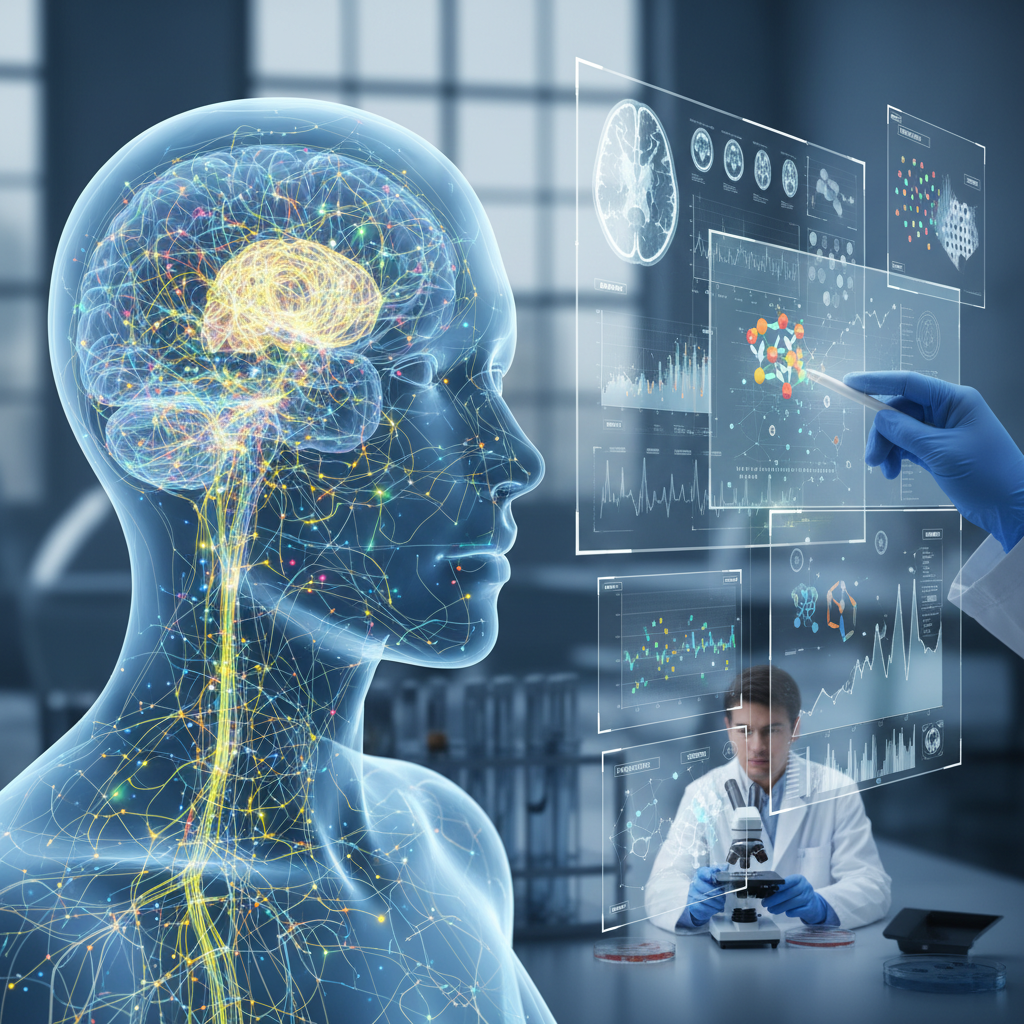
Brain imaging may help move mental health care towards a more biological era — but the shift is still early
Brain imaging may help move mental health care towards a more biological era — but the shift is still early
Psychiatry has long lived with an uncomfortable tension. It treats common, serious and often disabling conditions, yet it still relies heavily on interviews, symptom clusters and behavioural observation to define disorders and guide treatment. That does not mean psychiatry is unscientific. It means that, compared with many other areas of medicine, it still has relatively few routinely used biological markers that can anchor diagnosis and treatment decisions.
That is why interest in brain imaging in mental health keeps growing.
The strongest safe interpretation of the supplied evidence is that advanced neuroimaging, especially when paired with artificial intelligence and biomarker-based frameworks, could help psychiatry move towards a more biologically informed model. That may eventually improve subtyping, differential diagnosis and treatment-response prediction. But there is an equally important limit: the field remains far from a routine clinical transformation.
Why symptom-based psychiatry has limits
Much of modern psychiatry is built around observable clinical patterns. Low mood, hallucinations, anxiety, emotional blunting, cognitive problems, impulsivity, sleep disturbance and social withdrawal all help shape diagnoses and treatment pathways.
The problem is that similar symptoms may arise from different biological mechanisms. At the same time, patients who receive the same formal diagnosis may have very different trajectories, treatment responses and underlying brain biology.
That creates a serious challenge. The question cannot remain only, “What symptoms does this person have?” It increasingly becomes, “What brain processes might be helping drive this pattern?”
That is where imaging enters the conversation.
What brain imaging could add
Brain imaging offers the possibility of looking more directly at the biological systems involved in mental illness.
One of the most relevant supplied references is a recent review of PET imaging in psychiatric disorders. It highlights the ability of PET to characterise:
- regional brain metabolism;
- neurotransmitter systems;
- synaptic density;
- and neuroinflammation.
Those are not minor details. They are the kinds of biological features that could help psychiatry move beyond describing distress and closer to understanding it mechanistically.
In theory, that could support a more precise model of care. Instead of grouping patients only by what they report or how they appear in clinic, clinicians and researchers may eventually be able to sort some patients by the biology most relevant to their condition.
That would not replace clinical judgement. It would add a deeper layer beneath it.
The biggest promise may be in sorting and predicting
The most realistic near-term promise of brain imaging in mental health is probably not that a scan will simply “diagnose depression” or “confirm schizophrenia” the way a lab test confirms an infection.
The stronger and safer angle is that imaging may help in:
- differential diagnosis, when conditions look clinically similar but may reflect different brain processes;
- subtyping, by separating patients currently placed under one diagnosis even though they may not share the same biology;
- and treatment prediction, one of the most important goals in precision psychiatry.
That matters because psychiatry still relies heavily on trial and error. A patient may spend weeks or months cycling through treatments before finding one that helps. If brain imaging could improve prediction of who is likely to respond to which treatment, that would represent a major practical shift.
Why AI matters so much here
Another important theme in the supplied evidence is the role of AI and computational methods.
This is not just technological hype. Brain data are extraordinarily complex. Useful clinical information may not sit in one obvious brain region or one simple measurement. It may appear in patterns across connectivity, function, metabolism, structure and timing.
AI-driven methods may help researchers and, eventually, clinicians:
- classify more complex brain-based patterns;
- identify biologically meaningful subgroups within broad psychiatric labels;
- estimate prognosis;
- and improve treatment-response models.
That is a key part of the precision-psychiatry story. The goal is not merely to take more scans. It is to make those scans interpretable in ways that matter clinically.
What a paradigm shift would really look like
If imaging, biomarkers and AI do begin to work together more effectively, the shift in mental health care would be more than technical. It would be conceptual.
Psychiatric diagnoses might gradually move away from being treated mainly as broad symptom categories and towards being understood as overlapping biological patterns with different mechanisms, risks and treatment implications.
That could reshape how clinicians think about:
- who is likely to deteriorate;
- who belongs to which subgroup;
- which treatment is worth trying first;
- and why two people with the same diagnosis can have very different outcomes.
In other words, the promise is not simply to “see the brain.” It is to organise psychiatric care in a way that is more closely aligned with the biology behind mental illness.
What the headline gets right
The headline gets the broad direction right. The supplied evidence does support the idea that brain imaging could help shift mental health care towards a more biologically grounded framework.
The PET literature supports the view that imaging can reveal important dimensions of brain function and pathology across psychiatric disorders. The broader review material suggests possible roles in differential diagnosis, more personalised care and prediction of treatment response. AI-focused work strengthens the case that computational analysis may be necessary to turn complex imaging data into useful classification and prognostic tools.
Taken together, that does support a serious precision-psychiatry story.
What the headline should not imply
The point requiring the most caution is the distance between promise and routine care.
Most of the supplied evidence is review-based and conceptual. It supports the field as an emerging direction, but it does not directly show that brain imaging has already changed everyday psychiatric practice in a widespread or standardised way.
There are also major practical barriers:
- high cost;
- limited access;
- lack of standardisation across centres and methods;
- ethical concerns around privacy, interpretation and overreach;
- and the biological heterogeneity of psychiatric disorders themselves.
That last point is especially important. Mental illnesses are not uniform. It is unlikely that a single imaging biomarker will work equally well across broad diagnostic populations.
One supplied paper also concerns biomarkers for Creutzfeldt-Jakob disease, which is not a primary psychiatric disorder and is only indirectly relevant to the headline. That does not make it useless, but it does reinforce the point that the evidence base here is broader and more conceptual than a direct demonstration of routine psychiatric transformation.
The biggest mistake would be overselling precision
There is a recurring temptation in this field to suggest that brain scans are on the verge of diagnosing most mental illnesses with high accuracy in ordinary practice.
The supplied evidence does not support that claim.
Psychiatric disorders are shaped by complex combinations of biological, psychological and social factors. Even when imaging captures something real and clinically meaningful, it is unlikely to provide a clean, one-size-fits-all answer for every patient.
So the safest message is not that brain scans can now diagnose mental illness with precision in everyday care. It is that brain imaging may help build a more biologically informed psychiatry, especially when integrated with other data layers rather than used in isolation.
Why this still matters now
Even if the clinical shift is still early, this line of research matters because it addresses one of psychiatry’s biggest frustrations: the gap between serious patient suffering and relatively blunt biological tools for understanding it.
If neuroimaging can help refine subgroups, distinguish mechanisms and improve treatment prediction, it could eventually reduce some of the guesswork that still shapes mental health care.
For patients, that could mean fewer failed treatment trials. For clinicians, better-informed decisions. For researchers, it could mean psychiatric categories that better reflect underlying biology rather than only surface presentation.
The balanced takeaway
The most responsible interpretation of the supplied evidence is that brain imaging, especially when combined with AI and biomarker frameworks, could help mental health care move towards a more biologically informed form of precision psychiatry.
The strongest support comes from imaging’s ability — particularly with PET — to characterise regional metabolism, neurotransmitter systems, synaptic density and neuroinflammation, along with its possible value for differential diagnosis, subgrouping and treatment prediction. Computational methods strengthen that promise by helping extract clinically useful patterns from highly complex brain data.
But the limits are just as important. The current evidence supports a field in development more than a field already transformed. Cost, access, standardisation problems, ethical concerns and the heterogeneity of psychiatric disorders remain major obstacles.
So yes, brain imaging may help shift the mental health paradigm. But for now, it is better understood as an important bridge towards a more biologically grounded psychiatry than as a finished clinical revolution.