Researchers are uncovering how glioblastoma spreads through the brain — and where it may be possible to slow it down
Researchers are uncovering how glioblastoma spreads through the brain — and where it may be possible to slow it down
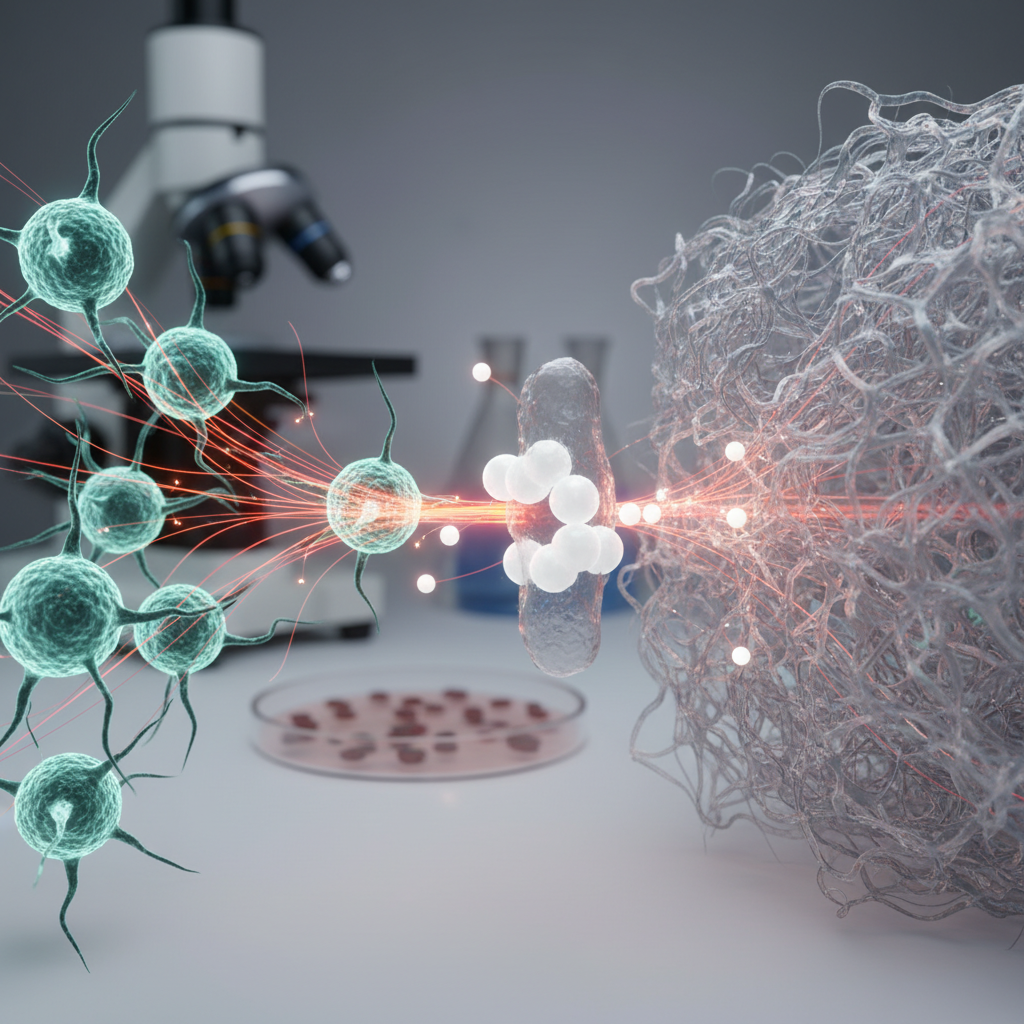
Among brain tumours, few diagnoses are as feared as glioblastoma. It is aggressive, difficult to control, and notorious for returning even after intensive treatment. But what makes glioblastoma especially devastating is not just its rapid growth. It is also the way it infiltrates surrounding brain tissue, sending cancer cells well beyond the most obvious part of the tumour.
That behaviour helps explain why treatment so often falls short. Surgeons may remove the main tumour mass, and patients may still receive radiotherapy and chemotherapy, yet infiltrating cells can remain behind in nearby brain regions. In practical terms, the problem is not only the tumour that can be seen — it is also the tumour that has already spread microscopically into the surrounding brain.
The safest reading of the supplied evidence is that glioblastoma infiltration appears to depend on specific developmental and migration-related biological programmes, and disrupting those programmes may offer a new strategy to slow the tumour’s spread through brain tissue. The key limitation is that this remains mainly a mechanistic and preclinical story, not proof of a clinically validated treatment.
Why infiltration matters so much in glioblastoma
Many cancers become dangerous because of how large they grow or how far they spread to distant organs. Glioblastoma is also dangerous because of how effectively it moves locally through the brain.
Cells from the tumour can migrate into the peritumoural zone — the tissue surrounding the visible lesion — where they remain active, adaptable, and hard to eliminate. This makes glioblastoma extremely difficult to contain with treatments aimed mainly at the central tumour mass.
Even when scans suggest the main lesion has been extensively removed, infiltrative cells may still be present. Those leftover cells can help drive recurrence.
That is why one of the most important scientific questions is no longer just how to kill glioblastoma cells, but how to stop them from moving, adapting, and re-establishing the disease.
Infiltrating cells may switch into a migration-ready state
One of the most important findings in the supplied evidence is that infiltrative glioblastoma cells in the peritumoural zone appear to activate transcriptional programmes linked to invasiveness, neuronal crosstalk, and a developmental state resembling migratory oligodendrocyte progenitor cells.
That matters because it changes how infiltration is understood. Instead of thinking of infiltrating cells as simply stray copies of the main tumour, the research suggests they may adopt a distinct biological state that is better suited to movement through brain tissue.
In other words, glioblastoma may not just grow outward at random. It may actively switch on molecular programmes that help cells behave more like mobile, developmentally flexible cells capable of navigating the brain environment.
That is an important shift in perspective. It suggests infiltration is an organised, biologically regulated process rather than a vague consequence of tumour aggressiveness.
The tumour may be interacting closely with the brain around it
Another striking part of the story is the role of neuronal crosstalk — the idea that infiltrating tumour cells may be responding to, and interacting with, signals from the surrounding brain.
This idea has become increasingly important in neuro-oncology. The brain is not just a passive setting in which glioblastoma grows. It may help shape how the tumour behaves.
If that is true, then invasion is not simply a cancer cell acting alone. It is a process shaped by interaction between tumour cells and the brain microenvironment.
That matters for treatment strategy. It may not be enough to target proliferation alone. Effective therapy may also need to interfere with the signals that help tumour cells migrate, survive, and adapt once they leave the main tumour mass.
ZEB1 may be one of the regulators keeping invasive cells in that state
The supplied evidence also identifies ZEB1 as a regulatory factor that helps maintain infiltrative glioblastoma cells in an invasive, undifferentiated state.
This is especially important because it offers more than a descriptive finding. It suggests a functional target.
When researchers identify a regulator that helps sustain a dangerous tumour behaviour, the next logical question is whether that regulator can be disrupted. In this case, the implication is that infiltration may not be inevitable. If it depends in part on specific regulators, then those regulators may be vulnerable to intervention.
That does not mean blocking ZEB1 is already a ready-to-use treatment. But it does strengthen the broader concept that the invasive behaviour of glioblastoma may be biologically targetable.
Invasion seems to be controlled by multiple signalling routes
The supplied references also show that glioblastoma infiltration is unlikely to be driven by one single pathway.
Additional mechanistic work supports the idea that migration and invasion can be controlled through signalling nodes such as YAP-TRIO-Rho GTPase pathways. Broader review literature also points to Wnt/β-catenin and PI3K/Akt/mTOR as major contributors to glioblastoma invasion and possible therapeutic targets.
That convergence matters. When different lines of research point to the same broader conclusion — that invasion depends on recognisable signalling and developmental programmes — confidence in the concept grows.
At the same time, it also highlights why this will be difficult to translate into treatment. Glioblastoma invasion is probably driven by multiple overlapping systems, not a single switch.
What this could mean for future treatment
Clinically, the most interesting implication is that future glioblastoma treatment may need to focus not only on shrinking or removing the main tumour, but also on targeting the cells that infiltrate beyond it.
That could mean therapies designed to:
- identify infiltrative cellular states;
- map the signals that support migration;
- disrupt regulators that preserve invasive behaviour;
- and combine those strategies with surgery, radiotherapy, and drug therapy to reduce recurrence.
This is a meaningful shift in emphasis. Instead of treating invasion as a side effect of tumour growth, researchers are increasingly treating it as a core therapeutic problem.
The major limitation: no proven patient benefit yet
This is where caution matters most.
The supplied evidence is strongest at the mechanistic and preclinical level, not as proof that patients already benefit from therapies aimed at these pathways.
So while the headline suggests researchers have found a way to inhibit infiltration, the more careful interpretation is that they have identified mechanisms that appear potentially targetable. That is scientifically important, but it is not the same as showing improved survival, delayed recurrence, or reliable clinical benefit in real-world patients.
This distinction matters even more because glioblastoma is unlikely to depend on one pathway alone. Blocking a single mechanism may not be enough to meaningfully stop spread through the brain.
That is a familiar problem in cancer biology: a compelling target in the laboratory does not always become a sufficient treatment in the clinic.
Why this kind of discovery still matters
Even without immediate clinical application, this kind of research matters. Glioblastoma remains one of the clearest examples of a disease where current treatments are limited in what they can achieve.
In that setting, understanding the biology of infiltration is not an academic detail. It is a strategic priority.
Each step that explains how tumour cells migrate, remain undifferentiated, and interact with the brain moves the field closer to more intelligent treatment design. The future may not depend on a single cure, but on combinations that attack tumour growth, resistance, and infiltration at the same time.
From that perspective, showing that invasion follows specific developmental and migration-related programmes is important because it turns one of the most destructive features of glioblastoma into a problem that is at least more definable, and perhaps eventually more targetable.
The balanced takeaway
The most responsible interpretation of the supplied evidence is that glioblastoma infiltration depends on specific biological programmes linked to invasiveness, migration signalling, development-like cellular states, and interaction with the brain microenvironment.
Patient-based research suggests infiltrative cells in the peritumoural zone activate transcriptional programmes consistent with that behaviour, and identifies ZEB1 as a regulator helping to maintain an invasive, undifferentiated state. Additional mechanistic studies and broader reviews support the role of signalling systems such as YAP-TRIO-Rho GTPase, Wnt/β-catenin, and PI3K/Akt/mTOR in glioblastoma invasion.
But the limits are crucial: this is a story about invasion biology and potential therapeutic targets, not about a clinically proven treatment. The benefit to patients from blocking these mechanisms remains unproven, invasion is likely driven by multiple overlapping pathways, and it would be misleading to suggest that glioblastoma spread can already be reliably stopped in practice.
Even so, the direction is important. If infiltration is one of the central reasons glioblastoma remains so difficult to control, then learning how to disrupt its migration programmes may prove to be one of the more promising paths towards making this disease less relentless.