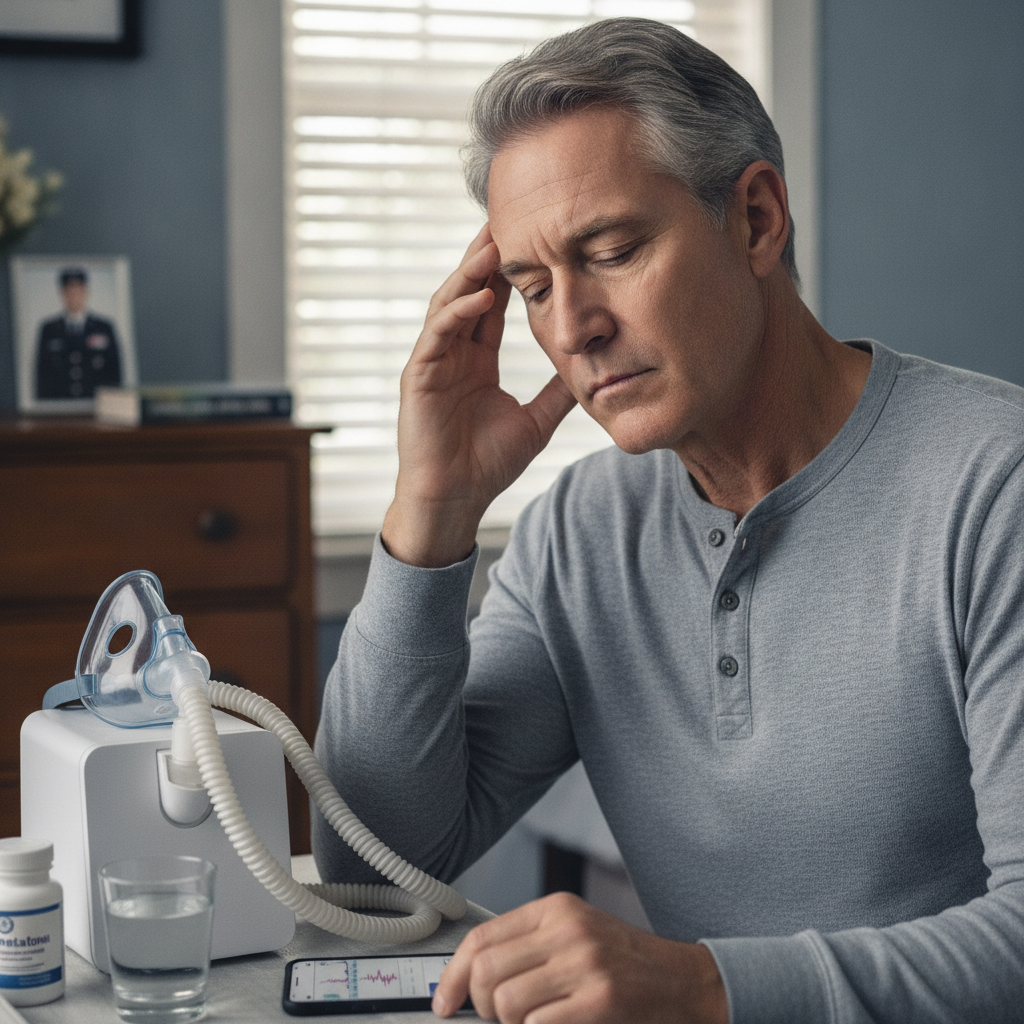
Having insomnia and sleep apnoea together may signal higher type 2 diabetes risk, and that may matter especially in veterans
Having insomnia and sleep apnoea together may signal higher type 2 diabetes risk, and that may matter especially in veterans
When people talk about type 2 diabetes risk, the conversation usually centres on body weight, diet, physical activity, and family history. All of that matters. But one factor has spent years getting less attention than it probably deserves: sleep. And not just sleeping too little. Sleep quality, fragmented rest, and specific sleep disorders appear to play an increasingly important role in metabolic health.
Two problems stand out in particular because they are both common and often underestimated: insomnia and sleep apnoea. On their own, each has already been linked to cardiometabolic harm. Together, though, they may point to an even more vulnerable group.
The safest reading of the supplied evidence is exactly that: having insomnia and sleep-disordered breathing at the same time appears to identify a subgroup at higher risk of future type 2 diabetes and other cardiometabolic complications, and that may be especially important to recognise in veteran populations. The central point is not that every veteran with poor sleep is headed for diabetes, but that overlapping sleep disorders may function as an important clinical warning sign.
When the problem is not just poor sleep, but poor sleep in more than one way
Insomnia and sleep apnoea are different disorders.
Insomnia usually involves difficulty falling asleep, staying asleep, or getting back to sleep after waking during the night. Obstructive sleep apnoea and other forms of sleep-disordered breathing, by contrast, involve repeated interruptions or reductions in breathing during sleep, which can fragment rest and reduce oxygen levels.
In real life, those problems can overlap. Someone may go to bed exhausted, struggle to fall asleep, wake repeatedly, and also spend the night breathing poorly. That combination can create a particularly unhealthy biological sleep pattern: unstable, unrefreshing, and often associated with abnormal physiological activation overnight.
That overlap is exactly what is drawing more research attention.
What the supplied literature suggests about metabolic risk
The references provided support the broader idea that insomnia combined with sleep-disordered breathing is linked to higher cardiometabolic risk, including diabetes.
The most relevant piece of evidence in this set is a large Women’s Health Initiative analysis, which found that risk for both insomnia and sleep-disordered breathing was associated with increased risk of type 2 diabetes and cardiovascular disease.
That matters because it suggests the overlap is not simply a sum of nighttime complaints. It may reflect a biological profile of greater metabolic vulnerability, in which physiological stress, sleep fragmentation, and possible hormonal and inflammatory disruption all carry more weight.
In other words, the combination may help identify people who warrant closer follow-up.
Why this stands out in veterans
The most specific part of the headline concerns veterans. Here, the supplied evidence offers meaningful support, though it is narrower than the headline may imply.
In the cited study, women veterans were more likely than non-veterans to have high risk for combined insomnia and sleep-disordered breathing. That reinforces the relevance of this sleep-risk phenotype in veteran populations, possibly because these groups may carry a greater burden of factors associated with disturbed sleep, such as chronic stress, mood disorders, persistent pain, disrupted routines, or prior occupational and psychological exposures.
That context helps explain why sleep may be such an important clinical lens in veterans. In populations with a heavier load of overlapping vulnerabilities, sleep disorders may stop being just symptoms and start acting as markers of broader health risk.
The link between poor sleep and diabetes makes biological sense
Even though the supplied studies are observational, the underlying biological logic is plausible.
Long-term insomnia and sleep apnoea may contribute to:
- increased sympathetic nervous system activation;
- poorer hormonal regulation of appetite and glucose;
- more systemic inflammation;
- disruption of cortisol rhythms and circadian timing;
- lower insulin sensitivity;
- and daytime fatigue that reduces physical activity.
As those mechanisms build up, the body may become more vulnerable to metabolic dysfunction. That does not mean sleep alone explains type 2 diabetes, but it does suggest sleep can be part of the machinery of risk.
Why the overlap may be especially important
One of the most useful parts of this story is that it shifts attention away from single sleep problems and towards the coexistence of multiple sleep disorders.
In clinical practice, that matters. Someone with insomnia may be given sleep hygiene advice. Someone with loud snoring may be assessed for apnoea. But when both conditions coexist, the risk may not simply be “double” in a straightforward sense. The combination may point to a deeper state of physiological strain.
That is why the idea of a higher-risk subgroup is probably the strongest and safest angle here. Rather than treating all patients with sleep symptoms in the same way, the overlap of insomnia and apnoea may help identify who needs more careful metabolic and cardiovascular assessment.
What the study does not allow us to say as confidently
For all its clinical interest, the limitations need to stay front and centre.
First, the best supplied evidence is not a study of all veterans. The most directly relevant article focuses on postmenopausal women veterans, comparing them with non-veterans. So it is not safe to assume the same risk estimate applies uniformly to male veterans, younger veterans, or all military populations.
Second, one of the supplied citations was described as not relevant to the central question, which weakens the evidence set for the exact headline claim.
Third, the sleep measures in the main study were based on risk categories, rather than definitive clinical diagnoses of insomnia and obstructive sleep apnoea in every participant. That is useful for large-scale epidemiology, but less precise than full diagnostic confirmation.
And because the findings are observational, they support association more strongly than direct causation. The study suggests these conditions travel with greater metabolic risk, but it does not by itself prove that one directly causes the other in all cases.
What this may mean in practice
Even with those caveats, the practical message still matters.
For clinicians, the combination of insomnia plus sleep-disordered breathing may deserve more attention than either condition on its own. Instead of focusing only on the main complaint, it may be worth asking:
- Does the patient snore or have witnessed breathing pauses at night?
- Are they experiencing daytime sleepiness, persistent fatigue, or frequent awakenings?
- Do they also have chronic difficulty getting to sleep or staying asleep?
- Are there already signs of cardiometabolic risk, such as weight gain, high blood pressure, or abnormal glucose levels?
That more integrated view may be especially useful in populations exposed to chronic stress and chronic illness, including many veterans.
What patients and families can take from this
For people living with insomnia, loud snoring, breathing pauses, or fragmented sleep, the main message is not panic but attention. Persistent sleep problems should not be dismissed as just an annoyance or a normal part of ageing.
When two sleep disorders overlap, the consequences may extend beyond tiredness and poor daytime function into the territory of metabolic and cardiovascular health. Recognising that earlier may open the door to better investigation, treatment, and monitoring.
That may be particularly relevant in veteran communities, where sleep difficulties can intersect with other emotional and physical health burdens.
The balanced takeaway
The most responsible interpretation of the supplied evidence is that the combination of insomnia and sleep-disordered breathing appears to mark a subgroup at higher future risk of type 2 diabetes and other cardiometabolic complications, and that this pattern may be especially important to recognise in veteran populations.
The Women’s Health Initiative analysis supports an association between high risk for insomnia plus sleep-disordered breathing and higher risk of type 2 diabetes and cardiovascular disease, and it also found that women veterans were more likely than non-veterans to show this sleep-risk profile.
But the limits need to remain explicit: the strongest supplied evidence does not represent all veterans, focuses on postmenopausal women veterans, uses risk categories rather than definitive diagnosis in all cases, and supports association more than causation. It would also be inappropriate to assume the same risk estimate applies equally to men or younger veterans.
Even so, the clinical message is valuable. When insomnia and sleep apnoea appear together, the issue may not just be sleeping badly. It may be a sign of a body under more metabolic strain than first meets the eye.