Sport clubs may have helped communities hold together during a public health crisis — but the evidence here is still indirect
Sport clubs may have helped communities hold together during a public health crisis — but the evidence here is still indirect
In any public health crisis, the focus usually falls on what is most visible and urgent: overloaded hospitals, government decisions, prevention campaigns, vaccination, testing, and case numbers. But long crises also wear down something less easy to measure and just as important — community life itself. Routine weakens, social ties fray, gathering places disappear, and many people lose both regular movement and a sense of belonging.
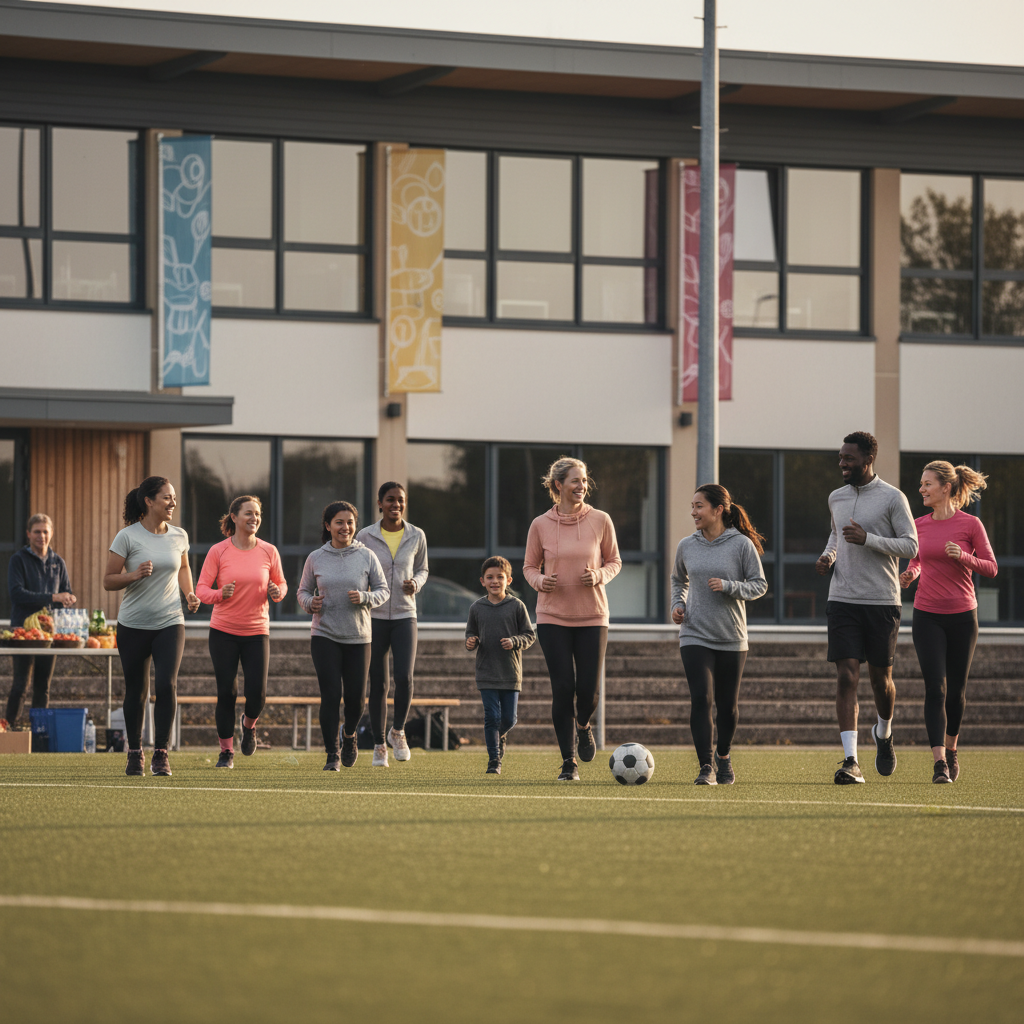
That is the background for the new headline claiming that sport clubs became lifelines during a public health crisis. It is a strong phrase, but the intuition behind it is understandable. Sport clubs are not just places to train. In many communities, they also function as meeting points, informal support networks, sources of structure, and environments where physical activity and social connection come together.
The question is whether the supplied evidence actually supports that framing. The most honest answer is: only indirectly.
Why the idea feels plausible
Even before looking at the studies, the social logic of the headline makes sense. In periods of collective stress, community institutions matter when they help preserve three things:
- social connection;
- routine and continuity;
- opportunities for movement and health-promoting activity.
Sport clubs can plausibly provide all three. For many people, attending a club does not only mean exercising or playing a sport. It means seeing familiar faces, keeping a schedule, being accountable to a group, leaving the house for a purpose, and maintaining some structure in daily life.
In that sense, sport clubs could reasonably help support wellbeing during difficult periods. When other forms of social life weaken, organised community spaces may help people preserve connection and rhythm.
What the supplied literature actually supports
The papers supplied do not directly study sport clubs during a public health crisis. That is the central limitation of the story. But they do support the broader background idea that physical activity, emotional support, and social influence can work together in ways that matter for health and wellbeing.
One of the studies supports the broader idea that social influence and support can motivate physical activity, especially in older adults. That matters because it suggests exercise is often not just an isolated personal decision. It is frequently shaped by companionship, encouragement, social expectation, and belonging.
Another study supports a positive relationship between physical activity, emotional support, and wellbeing in university students. Again, the important point is not simply that movement is good for health, but that movement embedded in social settings may be tied to better emotional outcomes.
Taken together, those studies support a general principle: socially embedded physical activity settings can plausibly help sustain wellbeing.
What they do not do is directly show that sport clubs became essential supports during a specific public health emergency.
Why exercise settings matter more when they are social
This matters because the headline is not really only about sport. It is about the difference between physical activity done alone and physical activity done within a community structure.
A club environment may offer several things at once:
- encouragement to keep showing up;
- social recognition;
- a sense of purpose and presence;
- informal emotional support;
- and a recurring structure to everyday life.
Those factors may be especially relevant during stressful periods. In a crisis, staying active can be difficult enough. Staying active while also remaining socially connected may be much more sustainable than trying to do both separately.
That is why the idea of sport clubs and community health is intuitively persuasive, even if the specific evidence remains limited.
The problem with the word “lifeline”
The strongest caution here concerns the headline’s language. Calling sport clubs “lifelines” during a public health crisis is emotionally vivid, but stronger than the supplied evidence justifies.
That phrase suggests something central, clearly demonstrated, and directly observed in a crisis context. But the studies provided do not investigate that scenario. They support the general health value of social support and physically active settings, not the stronger claim that sport clubs functioned as demonstrated crisis-response anchors during a particular public health event.
That distinction matters. It is one thing to say sport clubs could plausibly help sustain wellbeing during difficult periods. It is another to claim that the evidence already shows they served as lifelines during a crisis.
Where the evidence is weakest
The biggest problem is the mismatch between the headline and the supporting literature. None of the supplied studies directly examines:
- sport clubs during a pandemic or other public health emergency;
- the role of clubs in community resilience under crisis conditions;
- or the specific contribution of clubs to health support during prolonged disruption.
One of the supplied papers is also unrelated to the topic, dealing with pre-conception management. That weakens the evidence base further.
So it would be an overstatement to present this as robust evidence that sport clubs played a proven crisis-response role.
Why the story still matters
Even with that weak match, the story still touches something important in public health: the idea that local social infrastructure can be part of community health.
That includes institutions and spaces that do not always sit at the centre of health policy discussion, such as:
- community associations;
- sport clubs;
- recreational groups;
- social gathering places;
- and informal support networks.
In times of stress, these settings may help buffer isolation, routine disruption, and social fragmentation. They do not replace public services or formal health care. But they may strengthen a community’s ability to remain connected and functional.
That is a more defensible and useful way to read the headline.
What this suggests about community health
The most valuable part of the story may be the reminder that population health is not sustained by medical interventions alone. It also depends on environments that make healthy behaviour and human connection easier to maintain.
In many situations, wellbeing is preserved not only through clinical advice but through settings that help people keep moving, keep meeting, and keep belonging.
Sport clubs can sometimes serve that role. Not because they are automatically therapeutic, but because they combine:
- regular physical activity;
- repeated social contact;
- peer support;
- and shared local identity.
Together, those elements are plausibly relevant during periods of prolonged collective stress.
What should not be concluded
The supplied evidence does not support saying that sport clubs were universally beneficial, or that every community experienced them in the same way. It does not measure how large any effect may have been, or disentangle whether the possible benefit came more from exercise, social support, or some other feature of the environment.
It would also be wrong to imply that sport clubs can substitute for mental-health services, social policy, or formal crisis-response systems. At most, they can be understood as one possible part of a broader community resilience structure.
The most balanced reading
The most responsible interpretation is this: the headline describes a plausible idea that sport clubs may help support wellbeing, connection, and physical activity during difficult periods, which could in turn help communities stay more resilient.
The supplied literature supports that view only indirectly. It supports the broader connection between social support, physical activity, and wellbeing in some groups, but it does not directly demonstrate that sport clubs acted as “lifelines” during a specific public health crisis.
So the safest conclusion is this: sport clubs may reasonably be viewed as part of the social infrastructure of community health, especially when they help sustain connection, routine, and movement. But based on the evidence supplied here, that should be presented as a plausible and socially important interpretation — not as a strongly proven account of crisis response.