HPV Self-Sampling Could Unlock Cervical Cancer Screening for Women the System Misses
HPV Self-Sampling Could Unlock Cervical Cancer Screening for Women the System Misses
For decades, cervical cancer screening has depended on a fairly simple model: a woman books an appointment, attends a clinic, has a sample collected by a health professional, and then returns for results or follow-up if needed.
On paper, that sounds straightforward. In real life, it often is not.
Time off work, childcare, transport, embarrassment, past negative experiences in medical settings, discomfort with pelvic exams, and difficulty accessing primary care all shape whether screening actually happens. The result is one of public health’s most stubborn contradictions: cervical cancer is often preventable, yet screening still fails to reach many of the people who most need it.
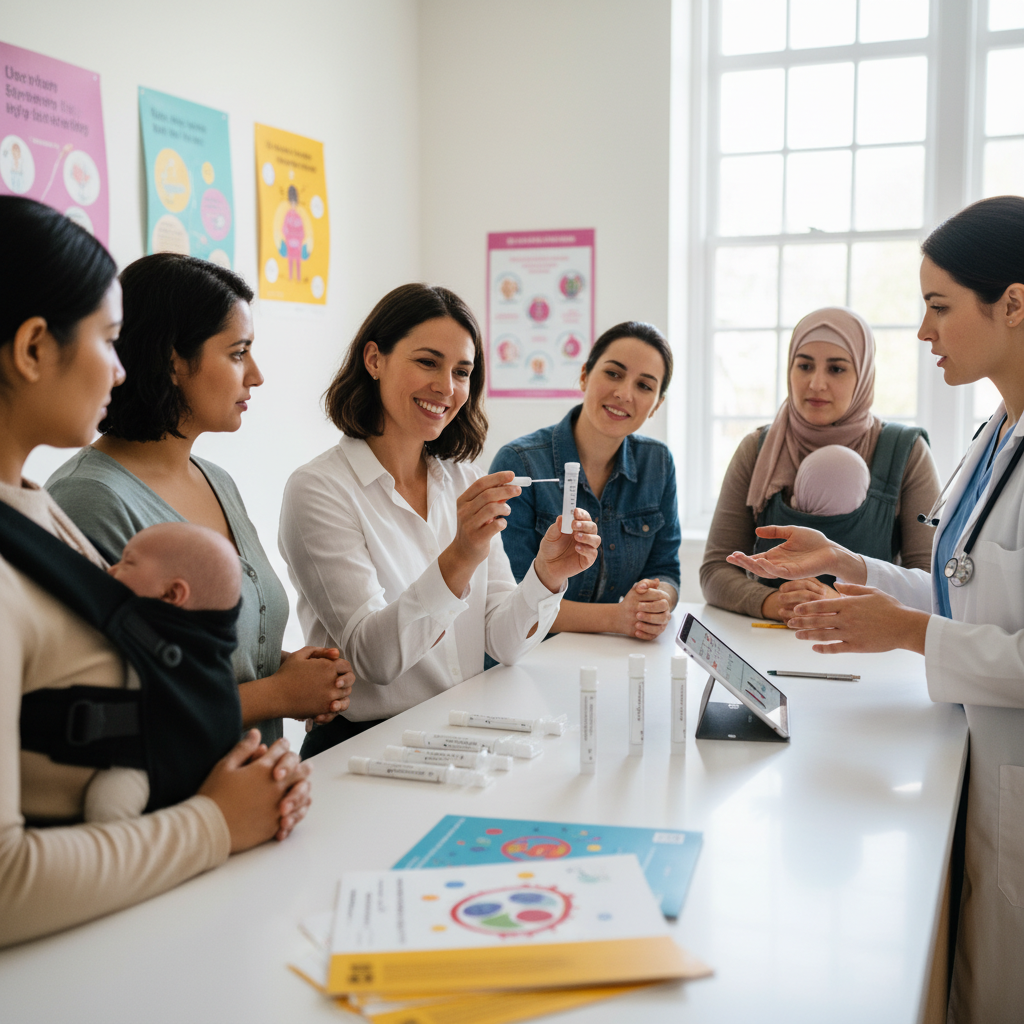
That is why HPV self-sampling has started to attract so much attention. Instead of relying entirely on clinic-based sample collection, self-sampling allows a woman to collect her own sample — often at home or through a community-based programme — for testing for human papillomavirus, or HPV, the virus responsible for most cervical cancers.
The power of this approach is not only in the science of the test. It is in the possibility of redesigning access.
The biggest promise is not replacing the clinic — it is reaching people left out of it
The strongest headline around this topic suggests that HPV self-testing boosts screening “across the board”. But the supplied evidence supports a slightly different — and arguably more important — conclusion.
HPV self-sampling appears especially valuable for women who are underscreened.
That distinction matters. This is not simply a story about adding one more option for women who are already engaged in routine screening. It is a story about addressing a structural failure in how screening programmes are delivered.
In public health, some of the biggest gains come not from making an already functional system slightly better for those already using it, but from finding ways to bring in people the system has routinely missed.
A global review included in the evidence points in exactly that direction, describing self-sampling as an important strategy for reaching underscreened women and scaling up screening coverage in both high-resource and low-resource settings. That makes it less a niche innovation and more a potential implementation tool.
Why women are responding positively to self-sampling
One of the clearest themes in the supplied literature is acceptability.
A systematic review of values and preferences found that HPV self-sampling is highly acceptable across different populations, and that many women prefer home-based collection to clinic-based sampling. That may sound like a secondary outcome, but in screening it is central.
An excellent test that people avoid is not an effective public-health tool.
Self-sampling may reduce several of the barriers that keep participation low: embarrassment, scheduling difficulties, discomfort with a pelvic exam, lack of privacy, or previous negative encounters in care. For some women, being able to collect a sample in their own home, on their own time, may be the difference between taking part and postponing screening yet again.
That does not mean every woman will prefer self-sampling. Some still feel more confident with a clinician-collected sample, especially if they worry about whether they will do the test correctly or whether the result will be as reliable. But from a public-health perspective, what matters is that self-sampling expands the menu of acceptable options.
And more options often mean more participation.
Screening coverage remains far from where it needs to be
The broader context strengthens the case.
Global screening data show that cervical cancer screening coverage remains low worldwide, particularly in lower-income settings. That does not mean self-sampling will automatically fix the problem. But it does mean the status quo is not working well enough.
When conventional screening programmes already reach most of the target population, a new approach has to show clear superiority to justify a major shift. But when large numbers of eligible women are still not being screened, the standard for public-health value changes. A strategy that is acceptable, practical, and scalable can be highly meaningful even before it proves universal superiority in every subgroup.
That is why HPV self-sampling has become such an important implementation story. It is not just about laboratory performance. It is about whether screening can be redesigned to fit better into women’s lives.
What self-sampling could change in practice
If well organised, self-sampling could support community outreach, posted kits, public-health campaigns, integration with primary care, and targeted approaches for groups with historically lower screening participation. It may be particularly useful in rural areas, remote communities, lower-resource settings, or populations where access to regular in-person screening is inconsistent.
From the patient’s perspective, the appeal is obvious: fewer practical and emotional barriers to getting started.
From the system’s perspective, the potential payoff is larger still: more women entering screening, more opportunities to detect high-risk HPV before cervical abnormalities progress, and more chances to prevent avoidable cancers.
But that potential depends on more than the sample itself.
The real test is implementation, not enthusiasm
This is the part that tends to disappear from the most optimistic headlines.
Self-sampling does not work on its own.
Its real impact depends heavily on programme design: how kits are distributed, whether instructions are clear, how samples are returned, how quickly results are communicated, whether the test quality is high, and — most importantly — whether women with positive results can access follow-up and treatment.
Without that infrastructure, self-sampling risks becoming a promising front door with no reliable hallway behind it.
In cancer screening, that is not enough. Identifying high-risk HPV without ensuring diagnostic follow-up and access to care limits how much population-level benefit the strategy can actually deliver.
In other words, making the first step easier matters. But the rest of the pathway matters just as much.
What the evidence supports — and what it does not
Taken together, the supplied references support a strong case for HPV self-sampling as a credible way to expand access to cervical cancer screening. The evidence is particularly persuasive when it comes to acceptability, programme reach, and practical potential for engaging women who are underscreened.
What the evidence supports less directly is the broadest version of the claim — that self-sampling boosts screening “across the board” in every population equally.
The literature here is stronger on feasibility, preferences, and implementation promise than on proving universal uptake gains in all groups under all conditions. Much of the evidence comes from reviews and programme analyses rather than one definitive trial showing the same magnitude of benefit everywhere.
That does not weaken the significance of self-sampling. It simply places it where it belongs: as a powerful screening-expansion strategy, not a one-step universal fix.
What this could mean in the UK
In the UK, this story matters because organised cervical screening exists, but participation is still uneven. Women in deprived areas, some minority ethnic communities, people with past trauma, those with limited trust in healthcare, and those who struggle with appointments may all be less likely to attend traditional clinic-based screening.
That makes self-sampling more than a convenience story. It becomes a health-equity story.
If implemented well, it could help screening programmes reach women who are not being effectively served by the current model. But its success would depend on how thoughtfully it is integrated — not only as a kit, but as part of a complete pathway with education, laboratory quality, reminders, and timely follow-up care.
A shift in how screening is designed
Perhaps the most interesting part of the self-sampling story is that it changes the question.
Instead of asking only, “How do we get more women into the clinic?”, it asks, “How do we design screening so it works better in real life?”
That is a bigger shift than it sounds.
Cancer prevention is not only about having the right test. It is also about dignity, convenience, trust, communication, and continuity. Self-sampling speaks to all of those. That may be why it has moved from a technical idea to a serious public-health strategy.
The most useful bottom line
The available evidence supports a clear message: HPV self-sampling is highly acceptable, has real potential to expand cervical cancer screening participation, and may be especially important for reaching women who are currently underscreened.
What it does not prove just as clearly is that the benefit is uniform across all groups, settings, and implementation models.
Even so, that hardly weakens the importance of the story. In public health, the interventions that matter most are often the ones that bring prevention closer to people who have been left out.
If HPV self-sampling delivers on its promise, it will not just modernise screening. It could help correct one of the screening system’s most persistent failures: missing the women who most needed to be included in the first place.