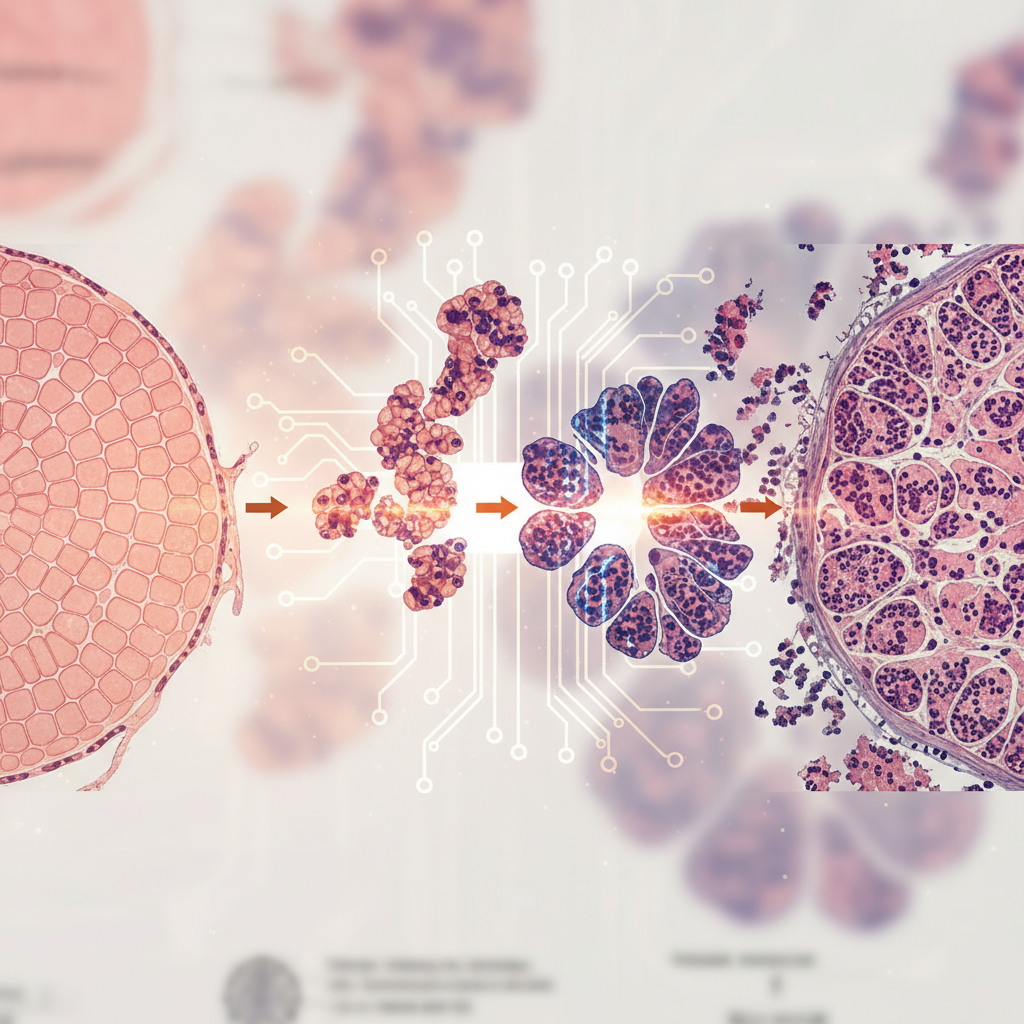
How pancreatic cancer begins: new research reinforces that the disease may start when a precancerous growth stops repairing and starts progressing
How pancreatic cancer begins: new research reinforces that the disease may start when a precancerous growth stops repairing and starts progressing
Pancreatic cancer remains one of the most feared diagnoses in oncology. That is partly because it is so often detected late, when options for treatment are already limited. For that reason, any clue about how this cancer actually begins attracts immediate attention. Understanding the earliest stages of the disease is one of the few plausible ways to imagine better risk detection, better surveillance, and perhaps one day intervention before invasive cancer takes hold.
The new headline suggests exactly that: that researchers have shown how a benign growth “flips the switch” and begins turning into pancreatic cancer. It is a compelling framing. But the safest reading of the supplied evidence is more nuanced. What the literature most clearly supports is a broader and biologically coherent model: pancreatic cancer does not usually appear out of nowhere. In many cases, it seems to emerge through stepwise changes in precursor lesions and cell states, driven by persistent injury, inflammation, and oncogenic signalling that stops being temporary and starts pushing tissue towards malignancy.
Put differently, the strongest evidence here does not point to one newly proven universal switch. It points to a broader principle of pancreatic biology: cancer can arise when repair and adaptation stop being reversible and begin to lock tissue into a malignant trajectory.
Pancreatic cancer rarely appears all at once
There is a natural tendency to think of cancer as something that suddenly arrives. In the pancreas, however, the evidence points to a more gradual path. Before pancreatic ductal adenocarcinoma — the most common and deadliest form of pancreatic cancer — there may be precursor changes and intermediate stages in which tissue is no longer fully normal, even if it is not yet invasive cancer.
That matters because it changes the story. Instead of a single leap from healthy tissue to malignancy, what appears to happen is a sequence of biological steps through which pancreatic cells and structures become progressively less stable.
Among the key players in that process are:
- precursor lesions such as PanIN (pancreatic intraepithelial neoplasia);
- mucinous cystic neoplasms;
- intraductal papillary mucinous neoplasms;
- and shifts in cell identity triggered by damage or stress.
These stages do not mean that every precursor lesion will become cancer. But they do support the idea that pancreatic cancer often develops on a biological continuum rather than appearing abruptly.
When repair stops being repair
One of the most important concepts supported by the supplied references is acinar-to-ductal metaplasia. Despite the technical name, the logic is fairly understandable. Acinar cells in the pancreas, which normally help produce digestive enzymes, can change identity in response to injury or inflammation.
At first, that may be an adaptive response rather than a malignant one. It can be seen as a kind of temporary reprogramming that helps tissue cope with damage.
The problem begins when the signals driving that reprogramming do not go away. If injury, inflammation, or oncogenic stimulation persists, what started as a reversible stress response may become the first step in a more dangerous biological path.
That is where the headline has some real grounding. The “switch” does not have to mean a single magical event. It may refer to the point at which a previously reversible state no longer returns to normal and instead begins accumulating features associated with cancer progression.
From metaplasia to precursor lesion to invasive cancer
The supplied literature supports the idea that acinar-to-ductal metaplasia can progress towards PanIN, and that PanIN can then, with additional changes, advance towards pancreatic ductal adenocarcinoma.
This is important because it frames pancreatic cancer as a layered process. Rather than one mutation doing all the work, the picture is one of interaction between:
- persistent tissue injury;
- chronic inflammation;
- cell-state reprogramming;
- and activation of molecular pathways that favour abnormal survival and growth.
That helps explain why the pancreas may spend time in a biological grey zone: no longer normal, but not yet fully malignant.
The molecular pathways that help lock progression in place
Another major axis of evidence here involves Notch signalling. This cell-communication pathway is important in normal development and tissue repair, but it is also strongly implicated in pancreatic tumour biology.
The supplied references suggest that Notch signalling is active in both precancerous pancreatic lesions and established pancreatic cancer. That supports the idea that certain molecular pathways may function as progression mechanisms — helping determine whether injured tissue returns towards normality or continues moving towards cancer.
This is where the language of a “switch” has some journalistic usefulness, provided it is not oversimplified. Not because one single button has now been found that explains every case, but because some pathways do seem to help fix malignant progression in place once other precursor changes have already begun.
Different precursor lesions may follow different routes
Another important point from the evidence is that pancreatic cancer does not always arise from the same type of precursor or follow exactly the same biological script in every patient.
Broader molecular pathology work shows that lesions such as:
- PanIN;
- mucinous cystic neoplasm;
- and intraductal papillary mucinous neoplasm,
carry distinct molecular changes linked to pancreatic cancer development.
That matters because it resists the temptation to reduce pancreatic carcinogenesis to one simple story. This is not a fully solved puzzle with one universal answer. It is better understood as a set of biological routes that may converge on the same highly aggressive disease.
What this story gets right
The headline gets something important right by suggesting that pancreatic cancer may begin long before a visible invasive tumour is present. It also rightly emphasises that malignant transformation appears to depend on progressive biological change rather than on a completely sudden event.
That framing matters because it brings public understanding closer to how cancer biology often works. Cells do not usually jump from normal to malignant in a single clean step. They move through phases of instability, adaptation, selection, and eventually fixation of tumour-promoting traits.
In the pancreas, that seems to involve a tissue environment particularly vulnerable to persistent injury, inflammation, and cell-state reprogramming — a setting in which responses that may begin as protective can eventually be captured by tumour progression.
What should not be overstated
At the same time, it would be too strong to treat the supplied references as proof that scientists have now identified one newly discovered switch that definitively explains how all pancreatic cancer begins.
There are several reasons for caution:
- the supplied evidence supports a broad mechanistic framework more than one directly matched experimental discovery;
- much of the support comes from reviews and integrative literature;
- pancreatic carcinogenesis is biologically heterogeneous;
- and understanding a mechanism does not automatically deliver a near-term clinical breakthrough in screening or treatment.
That distinction is important. In oncology, clarifying how a disease probably develops is a real advance. But it is not the same thing as saying the initiation problem has been fully solved.
Why this still matters so much
Even with those limits, understanding pancreatic cancer initiation has major value. This disease is feared partly because it is so often discovered late. If researchers can map the path from precursor lesion to reprogrammed cell state to malignancy more clearly, they can begin to ask more practical questions:
- which lesions deserve closer monitoring?
- which molecular changes separate lower-risk from higher-risk lesions?
- what marks the point at which a reversible response becomes locked in?
- and which pathways might one day be targeted to interrupt progression?
Those questions are not yet fully answered, but mechanistic research makes them more concrete.
What this could mean for future detection
It is too early to turn this kind of work into promises about population screening or immediate prevention. The pancreas is difficult to monitor, pancreatic cancer is still relatively uncommon in the general population, and precursor biology is complex.
Still, the direction matters. The better researchers understand the sequence of events that turns a precursor abnormality into invasive disease, the greater the chance of eventually building better tools to:
- identify people at higher risk;
- distinguish stable lesions from progressing ones;
- and perhaps intervene on the biology before malignancy is firmly established.
The most balanced reading
The supplied evidence supports a moderate and biologically strong conclusion: pancreatic cancer often appears to arise through stepwise changes in precursor lesions and cell states, especially when injury, inflammation, and oncogenic signalling persist long enough to prevent tissue from returning to equilibrium. Acinar-to-ductal metaplasia, progression towards PanIN, and the involvement of pathways such as Notch all support that view.
But the responsible interpretation has to recognise the key limit: the supplied references do not directly identify one newly reported universal “switch” that explains all cases of pancreatic cancer initiation. What they more solidly support is a broader mechanistic model in which additional biological changes can lock a precancerous lesion into malignant progression.
The safest conclusion, then, is this: pancreatic cancer seems to begin less as a sudden event and more as a gradual biological process, in which persistent injury, inflammation, cellular reprogramming, and abnormal signalling gradually push tissue towards malignancy. That does not solve pancreatic cancer initiation in full. But it does help explain, much more clearly, how an apparently benign growth may stop being part of repair and become the beginning of cancer.